Best Essential Oils for Sleep: Complete Guide (2026)

If you've ever lit a lavender candle to unwind, or noticed your shoulders drop the moment you stepped into a spa, you already know something powerful: scent has a real effect on how relaxed we feel. Essential oils take that everyday experience and put it in a small glass bottle — concentrated, portable, and easy to add to your nighttime routine.
This guide walks you through the five most popular essential oils people use to wind down before bed, four simple ways to use them, and a beginner-friendly safety checklist so you can start with confidence.
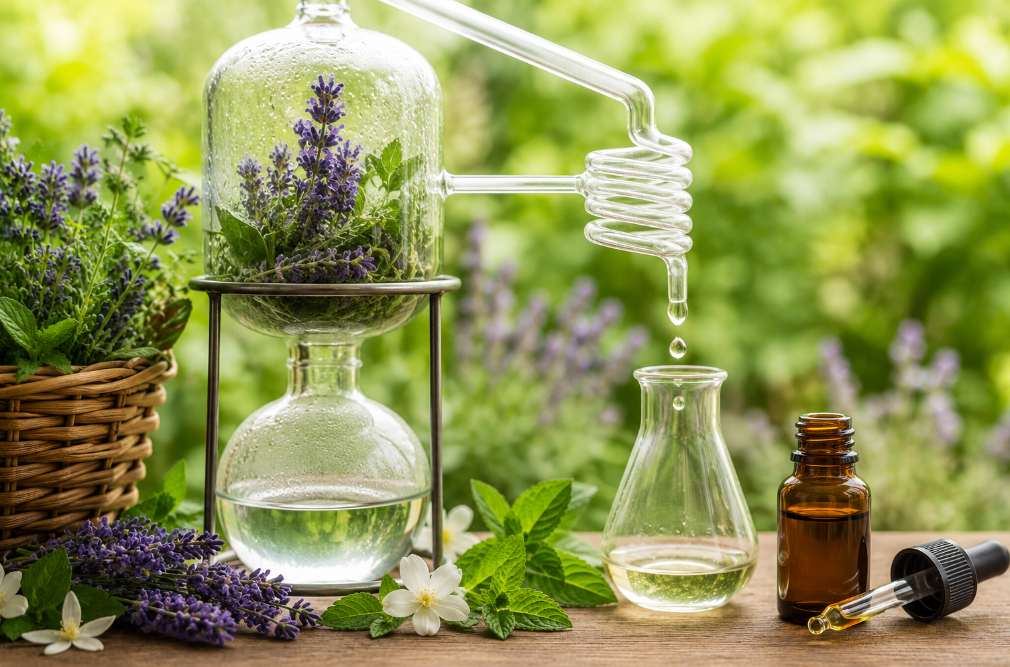
What Are Essential Oils, Exactly?
Essential oils are concentrated extracts from plants — usually from the leaves, flowers, bark, resin, or peels. They carry the natural aromatic compounds the plant produces, and a single small bottle can hold the equivalent of pounds of plant material.
Two things to know up front:
- They're highly concentrated. A few drops go a long way. Most are meant to be diluted before any skin contact.
- They're not regulated like medicines. Quality varies widely between brands. Look for third-party tested, therapeutic-grade oils from a source you trust.
Essential oils have been part of traditional practices in cultures around the world for thousands of years. Modern aromatherapy is a more recent (roughly 20th-century) discipline that builds on those traditions and combines them with early research into how scent may interact with the nervous system.
How Scent May Support Relaxation
When you inhale an aroma, scent molecules travel through your nose and interact with the olfactory system — the same network that gives you instant emotional reactions to familiar smells (think: grandma's kitchen, ocean air, fresh-cut grass).
That olfactory system has direct connections to the parts of the brain that handle emotion and memory. This is why a scent can shift your mood within seconds, sometimes before you've even consciously identified what you're smelling.
The most-studied "calming" essential oils — like lavender — seem to interact with this pathway in ways that may help signal to the body that it's time to slow down. Some research suggests certain aromatic compounds (like linalool, found in lavender and bergamot) may have a measurable effect on perceived relaxation, though more research is always welcome and individual responses vary widely.
What this means for you: essential oils aren't a sleeping pill. They're a gentle cue — part of a routine that, over time, can help your body associate a particular scent with "it's almost bedtime."
The 5 Best Essential Oils for Sleep
Here are five of the most popular oils people reach for at bedtime. Each has a distinct personality — pick the one whose aroma you genuinely enjoy. Personal preference matters more than any "top 10" list, because you'll only stick with a scent you actually like.
1. Lavender
Lavandula angustifolia
Lavender is the most-researched essential oil for relaxation, and it's earned its reputation. The aroma is soft, floral, and a little herbaceous — gentle enough that most people, including children over six and many pets, tolerate it well.
Lavender is traditionally used to support calm before bed. Some studies suggest its main compounds (linalool and linalyl acetate) may help reduce feelings of tension and support a more relaxed state.
How people use it: 4–6 drops in a bedroom diffuser starting 30 minutes before bed, or a few drops mixed into a carrier oil and applied to pulse points and the soles of the feet.
2. Cedarwood
Cedrus atlantica / Juniperus virginiana
Cedarwood has a warm, woody, slightly sweet aroma that many people find grounding. It contains a compound called cedrol, which some research has explored for its potentially calming effects.
Cedarwood is one of the more affordable essential oils, and it blends beautifully with lavender to create a "cozy forest" feeling in the bedroom. If lavender feels too floral for you, cedarwood is often the next stop.
How people use it: 3–5 drops in a diffuser, often blended 50/50 with lavender. Cedarwood is generally well-tolerated topically when diluted, making it a good choice for evening foot massages with a carrier oil.
3. Chamomile
Chamaemelum nobile (Roman) / Matricaria chamomilla (German)
There are two types you'll see: Roman chamomile and German chamomile. Roman chamomile has a softer, apple-like sweetness and is the more common choice for bedtime aromatherapy. Both have been traditionally used to support calm.
Chamomile is gentle enough to be a favorite for evening routines that include children (with appropriate dilution and supervision). The aroma pairs naturally with lavender — together they're often called the "sweet dreams" combo.
How people use it: 2–3 drops in a diffuser (a little goes a long way), or diluted in a carrier oil for a soothing wrist or temple application.
4. Vetiver
Chrysopogon zizanioides
Vetiver is sometimes called the "oil of tranquility" in traditional practice. It has a deep, earthy, almost smoky aroma — very different from lavender or chamomile. It's thick and slow-pouring, which is normal.
Vetiver is the heavyweight of the calming oils. People who find lavender too light often reach for vetiver when they really need to "land" at the end of a busy day. Use it sparingly — its aroma is strong and a single drop can scent an entire room.
How people use it: 1–2 drops in a diffuser, often blended with lavender and cedarwood. Topically, it's best diluted heavily (under 1%) due to its intensity.
5. Bergamot
Citrus bergamia
Bergamot is a citrus oil — but unlike lemon or orange, its aroma has a calming, slightly floral quality. It's the scent in classic Earl Grey tea. Bergamot contains linalool and linalyl acetate (the same compounds that make lavender so popular for relaxation).
Bergamot is a great option if you want something that doesn't smell like a "sleep oil" — it's bright enough for early evening use without feeling stimulating.
How people use it: 3–5 drops in a diffuser, often paired with lavender or cedarwood for a layered, complex blend.
How to Use Essential Oils Before Bed
There are four common methods. Many people use more than one in the same evening.
Diffuser Method
A diffuser disperses essential oil into the air as a fine mist. It's the most popular and the easiest method for beginners.
- Setup: Fill the diffuser with water to its marked line, add 4–8 drops of oil (or a blend), and turn it on.
- Timing: Start the diffuser 20–30 minutes before bed so the room is gently scented by the time you lie down.
- Duration: Many modern diffusers have intermittent modes (30 minutes on, 30 minutes off). This is generally preferred over running continuously all night.
Topical Method
Applying essential oils to skin lets them absorb gradually. They must be diluted in a carrier oil first — neat (undiluted) application can cause irritation or sensitization.
- Beginner dilution: 1–2% — that's about 6–12 drops of essential oil per ounce of carrier (fractionated coconut, jojoba, or sweet almond oil all work well).
- Where to apply: Pulse points (wrists, neck, behind the ears), the chest, or the soles of the feet.
- Pre-made rollers are convenient — many sleep blends come pre-diluted in a 10ml roller bottle ready to go.
Pillow Spray Method
A diluted spray on your pillowcase delivers a gentle aroma throughout the night without direct skin contact.
- Simple recipe: 4 oz distilled water + 1 tbsp witch hazel (acts as an emulsifier) + 10–15 drops of essential oil. Shake well before each use.
- Best oils for pillow sprays: Lavender, chamomile, and cedarwood are gentle on fabric. Avoid citrus oils — they can stain.
- Test first: Spray a hidden corner of the pillowcase to make sure the fabric handles it well.
Bath Method
A warm bath 60–90 minutes before bed is a calming ritual on its own — adding essential oils can deepen the experience.
- Important: Essential oils don't mix with water alone. Combine 4–6 drops with a tablespoon of carrier oil, unscented bath gel, or a cup of Epsom salts first, then add to the running water.
- Best for the bath: Lavender, Roman chamomile, and bergamot.
- Skin sensitivity: If you have sensitive skin, start with just 2–3 drops and see how you feel.
Safety Tips for Essential Oils at Night
Essential oils are generally safe when used with common sense — but they're concentrated, and a little care goes a long way.
- Always dilute for skin contact. 1–2% is a safe starting point for adults. Less for sensitive skin and children.
- Patch test new oils. Apply a diluted drop to the inside of your forearm and wait 24 hours.
- Never ingest. Essential oils are not designed to be swallowed without professional guidance.
- Be cautious with children. Avoid use on infants under 6 months. Use lower dilutions and gentler oils (lavender, chamomile) for older children. Avoid eucalyptus and peppermint near children under 6.
- Be mindful around pets. Some essential oils, especially tea tree and certain citrus oils, can be toxic to cats and dogs. Diffuse in a ventilated room and allow pets to leave if they want to. Birds are especially sensitive — keep diffusers out of bird rooms entirely.
- Watch for photosensitivity. Citrus oils (bergamot, lemon, lime, grapefruit) can make skin more reactive to UV light. Avoid sun exposure within 12 hours of topical application.
- Pregnancy and medications. Talk to your healthcare provider before introducing essential oils if you're pregnant, nursing, or taking any prescription medication.
- Quality matters. Choose oils that are third-party tested, in dark glass bottles, with the botanical (Latin) name clearly listed. See our complete safety guide for more detail.
A Sample Bedtime Routine With Essential Oils
The single biggest factor in better sleep isn't which oil you use — it's the consistency of your routine. Here's a simple 60-minute wind-down you can adapt to your own life.
â° 60 minutes before bed: Dim the overhead lights. Run a warm bath with 4–6 drops of lavender (mixed first into a tablespoon of carrier oil or a handful of Epsom salts). Soak for 15–20 minutes.
â° 45 minutes before bed: Towel off. Apply a pre-mixed sleep roller to your wrists, the back of your neck, and the soles of your feet. Lavender + cedarwood is a classic starting combination.
â° 30 minutes before bed: Start your bedroom diffuser with 4–6 drops total of your chosen blend. If you don't have a blend yet, try 3 drops lavender + 2 drops cedarwood.
â° 15 minutes before bed: Mist your pillowcase 2–3 times with a homemade pillow spray. Read a book, journal, or do a few minutes of slow breathing.
💤 Lights out: Set the diffuser to its intermittent mode if it has one (30 minutes on, 30 minutes off). Let it run for 1–2 cycles after you fall asleep, then it'll naturally turn off.
Frequently Asked Questions
Do essential oils actually help with sleep?
Essential oils are not a sleep medication, and individual responses vary. That said, many people find that adding a calming aromatherapy ritual to their evening routine helps them feel more relaxed and wind down more easily. The combination of a consistent routine + a pleasant aroma may help cue the body that it's time to rest.
Which essential oil is most popular for sleep?
Lavender, by a wide margin. It's the most-researched, most widely available, and generally well-tolerated calming essential oil. If you can only pick one to start with, lavender is the safest bet.
Can I run a diffuser all night?
Most aromatherapists recommend intermittent diffusing (30 minutes on, 30 minutes off) rather than continuous overnight use. This is gentler on your respiratory system, easier on the diffuser itself, and prevents the aroma from becoming overwhelming.
Are essential oils safe around pets?
Some are, some aren't. Lavender is generally considered one of the safer choices, but cats lack certain liver enzymes that help them metabolize some essential oil compounds — so caution is always warranted. Diffuse in a well-ventilated room, never apply oils directly to pets, and let your animal leave the room if they want to. Talk to your vet if your pet has health conditions.
Can children use essential oils for sleep?
Generally yes, with appropriate dilution and a few precautions. Avoid all essential oils on infants under 6 months. For older children, stick with gentle oils (lavender, Roman chamomile), use much lower dilutions (around 0.5%), and avoid certain oils entirely until age 6+ (eucalyptus, peppermint, rosemary). A drop or two in a diffuser is usually fine — but watch for any reactions.
How long do essential oils take to work for sleep?
Inhalation effects can be felt within minutes — that's why diffusing right before bed is so popular. Topical effects build more gradually. The bigger picture: most people notice the biggest benefit after 1–2 weeks of consistent use, as the routine itself becomes part of their body's "it's time to sleep" cue.
Final Thoughts
You don't need a cabinet full of oils to start. Pick one — probably lavender — and one method, probably a diffuser. Do it every night for two weeks. That's how most people discover whether essential oils have a place in their nighttime routine.
If you enjoy the experience, branch out from there: add cedarwood for a warmer, woodier feel; try a chamomile blend for nights when your mind won't stop; experiment with a homemade pillow spray. The goal isn't to use every oil — it's to build a quiet, dependable ritual you actually look forward to.
Good sleep is built from a lot of small, repeatable choices. Essential oils can be one of them.
Ready to Start Your Sleep Routine?
Our complete 6-oil collection includes lavender, peppermint, frankincense, and more — everything you need to begin any of the routines in this guide.
View the Complete Collection →This article is for educational purposes only and is not medical advice. Essential oils are not intended to diagnose, treat, cure, or prevent any disease. Always consult a qualified healthcare provider for persistent sleep concerns or before adding any new wellness practice to your routine.