A Guide to Lavender Essential Oil: Botanical Background, Uses & Safety
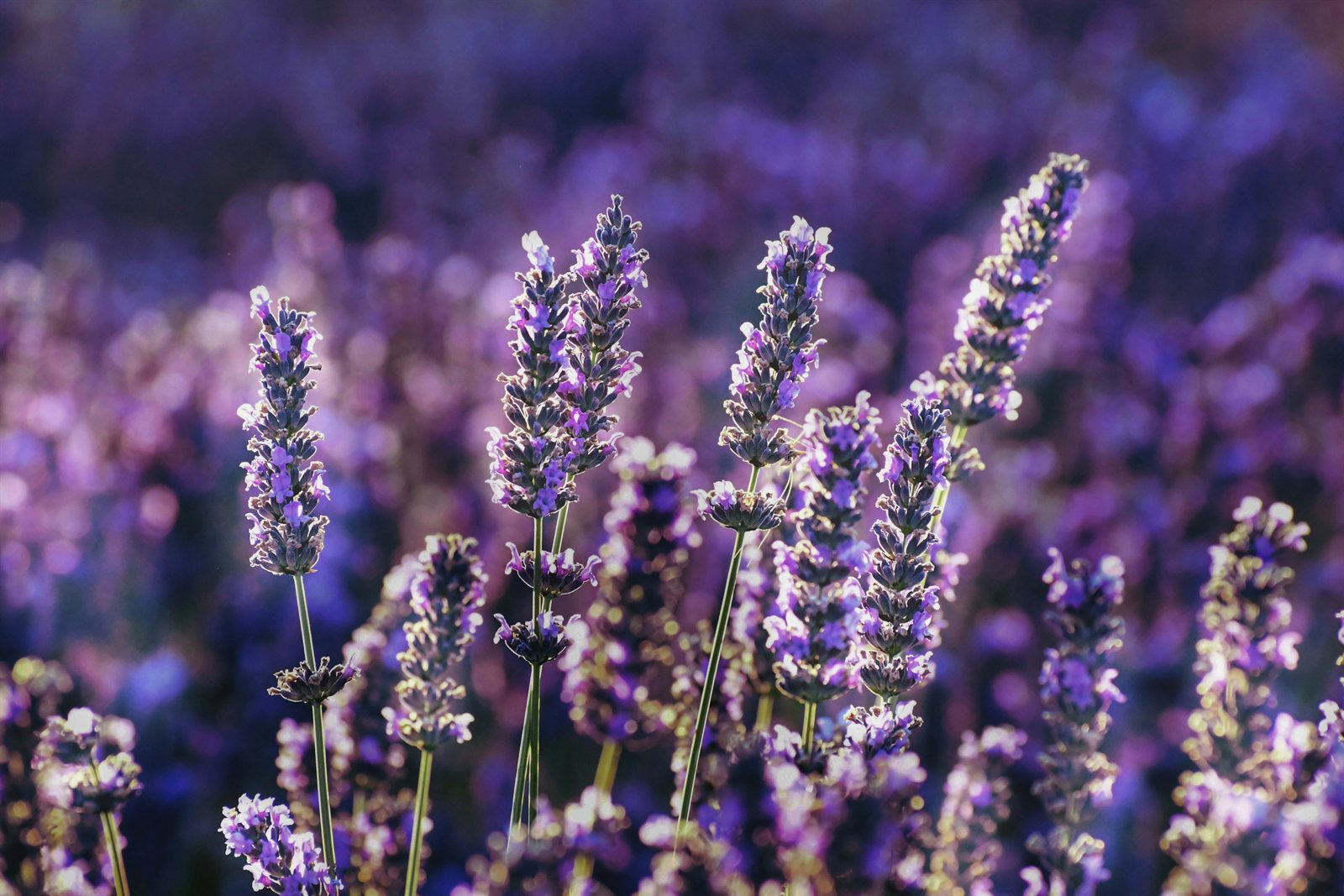
Lavender essential oil is steam-distilled from the flowers of Lavandula angustifolia and has a long history of traditional use in aromatherapy. It is one of the most commonly studied essential oils, and many people use it as part of a calming bedtime or stress-management routine.
This guide gives you a plain-English overview of where lavender comes from, the main chemical constituents reported in the literature, popular ways people use it, and important safety considerations. It is educational information, not medical advice.
What Is Lavender Essential Oil?
True lavender essential oil (Lavandula angustifolia) is steam-distilled from the flowering tops of the lavender plant, primarily grown in Provence, France, Bulgaria, and Tasmania. It is chemically distinct from lavandin (L. x intermedia), a hybrid with higher camphor content and different therapeutic properties.
The primary bioactive constituents of pure essential oils like lavender include:
- Linalool (25–45%) — anxiolytic, sedative, anti-inflammatory, analgesic
- Linalyl acetate (25–45%) — anti-inflammatory, antispasmodic, calming
- 1,8-Cineole (trace–6%) — antimicrobial, expectorant
- Camphor (<1% in true lavender) — analgesic, anti-inflammatory
- β-Ocimene — antimicrobial, antifungal
What People Use Lavender For
Lavender is most commonly used in aromatherapy for relaxation and as part of a calming bedtime routine. Some people also enjoy it during massage (diluted in a carrier oil) or in skincare blends. The descriptions below are general descriptions of traditional and popular uses — they are not medical claims, and individual responses vary widely.
1. Relaxation & Calming Routines
The most common use of lavender essential oil is as part of a wind-down ritual — diffused before bed, used in a bath, or applied (diluted) to pulse points. Linalool and linalyl acetate are the main aromatic constituents associated with lavender's characteristic scent and reported calming feel. Researchers continue to study how these compounds interact with the nervous system; published reviews report mixed but generally positive findings for short-term effects on perceived anxiety.
2. Sleep Routines
Many people incorporate lavender into a regular bedtime ritual. It is not a sleep medication, but a pleasant, consistent scent can become a useful cue to wind down. See our guide to essential oils for sleep for a practical bedtime routine.
3. Massage & Topical Use
Lavender is one of the most popular essential oils for massage when diluted in a carrier oil such as fractionated coconut, jojoba, or sweet almond. As with all essential oils, dilute appropriately and patch-test on a small area first.
4. Traditional Skincare & Blending Use
Lavender appears in many traditional skincare and DIY blending recipes for its scent and reported gentle profile. Avoid applying undiluted; follow standard dilution guidelines. People with sensitive skin or known allergies to fragrance compounds (especially linalool) should be cautious.
Dilution Guidelines & Safe Use
Commonly used carrier oils for lavender include fractionated coconut oil, jojoba oil, sweet almond oil, and argan oil. The carrier you choose affects absorption rate and skin feel — jojoba and fractionated coconut oil are popular for massage because they have a light, non-greasy texture.
Blending Recipes
Sleep & Relaxation Blend
Combine in 1 oz jojoba oil: 8 drops lavender + 4 drops Roman chamomile + 3 drops cedarwood. Apply to pulse points and soles of feet before bed.
Tension Headache Relief Roller
In a 10ml roller bottle: 6 drops lavender + 4 drops peppermint + 2 drops frankincense, fill with fractionated coconut oil. Apply to temples and back of neck at headache onset.
Anxiety & Stress Diffuser Blend
In diffuser with 200ml water: 4 drops lavender + 2 drops bergamot + 2 drops ylang ylang. Diffuse for 30–60 minutes during high-stress periods.
Choosing Quality Lavender Oil
Quality and labeling vary widely between brands. Many products sold as "lavender" are actually lavandin hybrids, blends, or synthetic fragrance oils. If you're using essential oils in a wellness routine, a small amount of label-reading goes a long way.
When sourcing lavender oil, look for:
- GC/MS (Gas Chromatography/Mass Spectrometry) test reports
- Botanical name on the label (Lavandula angustifolia, not just "lavender")
- Country of origin specified (France, Bulgaria)
- Dark glass bottle
- No added ingredients other than the pure oil
These five label cues are general guidance, not a quality guarantee — but a bottle that meets all five is more likely to contain what its label says.
Safety & Contraindications
- Pregnancy: Use with caution, especially in first trimester. Consult a midwife or physician.
- Infants under 2: Avoid topical application; diffusion is generally considered safe in well-ventilated spaces.
- Drug interactions: Lavender may potentiate sedatives and anxiolytics — use with caution if taking these medications.
- Allergy: Patch test before first use. Linalool can cause contact dermatitis in sensitive individuals.
- Hormone-sensitive conditions: Preliminary evidence suggests lavender may have mild estrogenic activity — use cautiously with hormone-sensitive conditions.
Summary
Lavender is one of the most familiar and widely used essential oils. People primarily reach for it as part of relaxation routines, for diffuser blends, and in diluted topical applications. Quality varies widely between brands — look for the full botanical name (Lavandula angustifolia) on the label, a country of origin, and ideally a third-party (GC/MS) test report.
Essential oils are not a substitute for medical care. If you are pregnant, nursing, on medication, or managing a health condition, talk with a qualified healthcare provider before incorporating essential oils into your routine.
This article is for educational purposes only and is not medical advice. Essential oils are not intended to diagnose, treat, cure, or prevent any disease.
.jpg)